
Atelier technology
From incoming water to your chosen drink.
Understand the treatment stages, then the controls that set temperature, sparkle, hydrogen, mineral balance and infusions.
Two tasks: treatment and preparation.
Water treatment addresses the incoming supply. Drink preparation sets the water’s temperature and adds the minerals, gas or ingredients you select. Keeping those jobs distinct makes the system easier to understand and the drink easier to personalize.
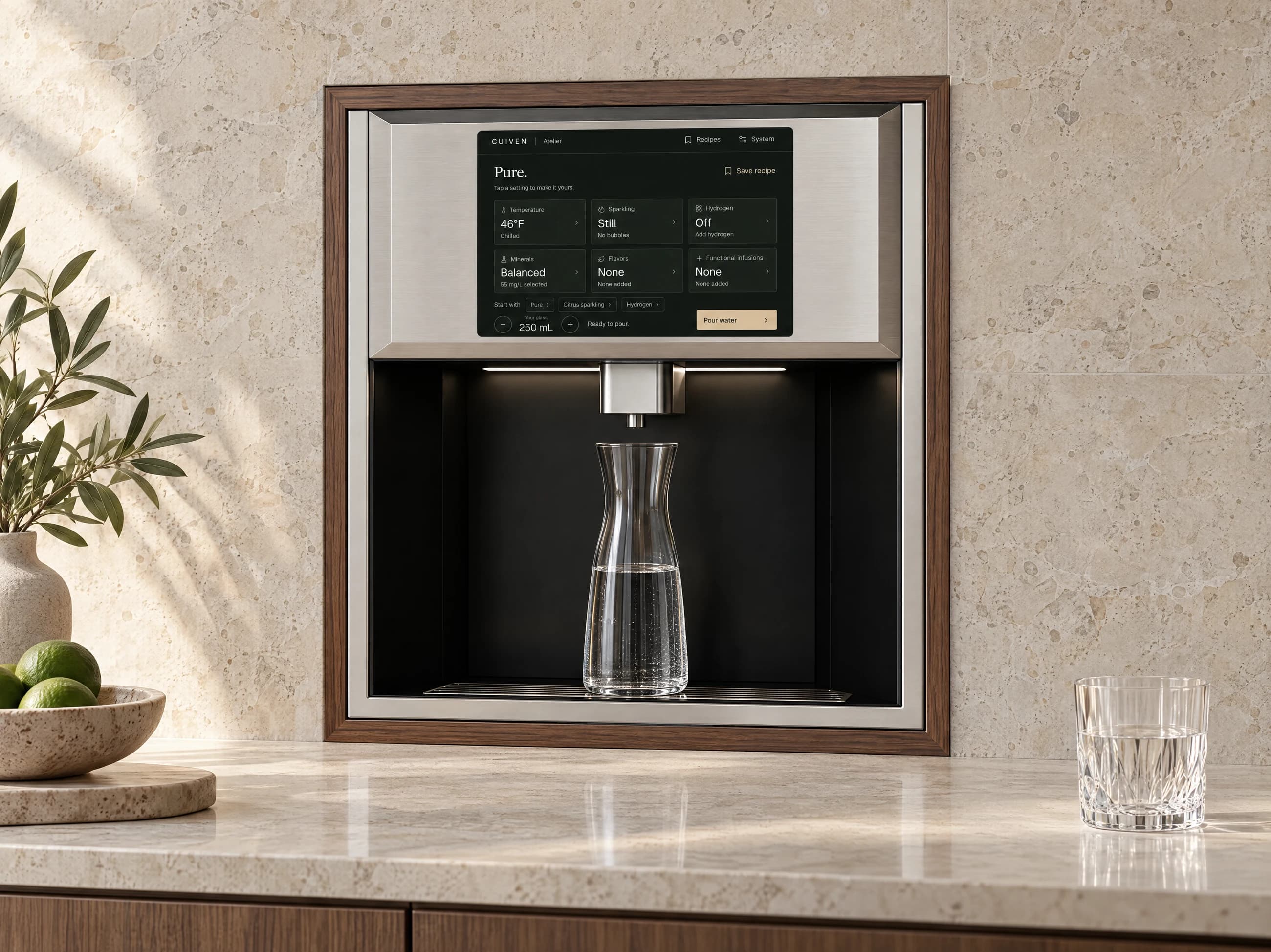
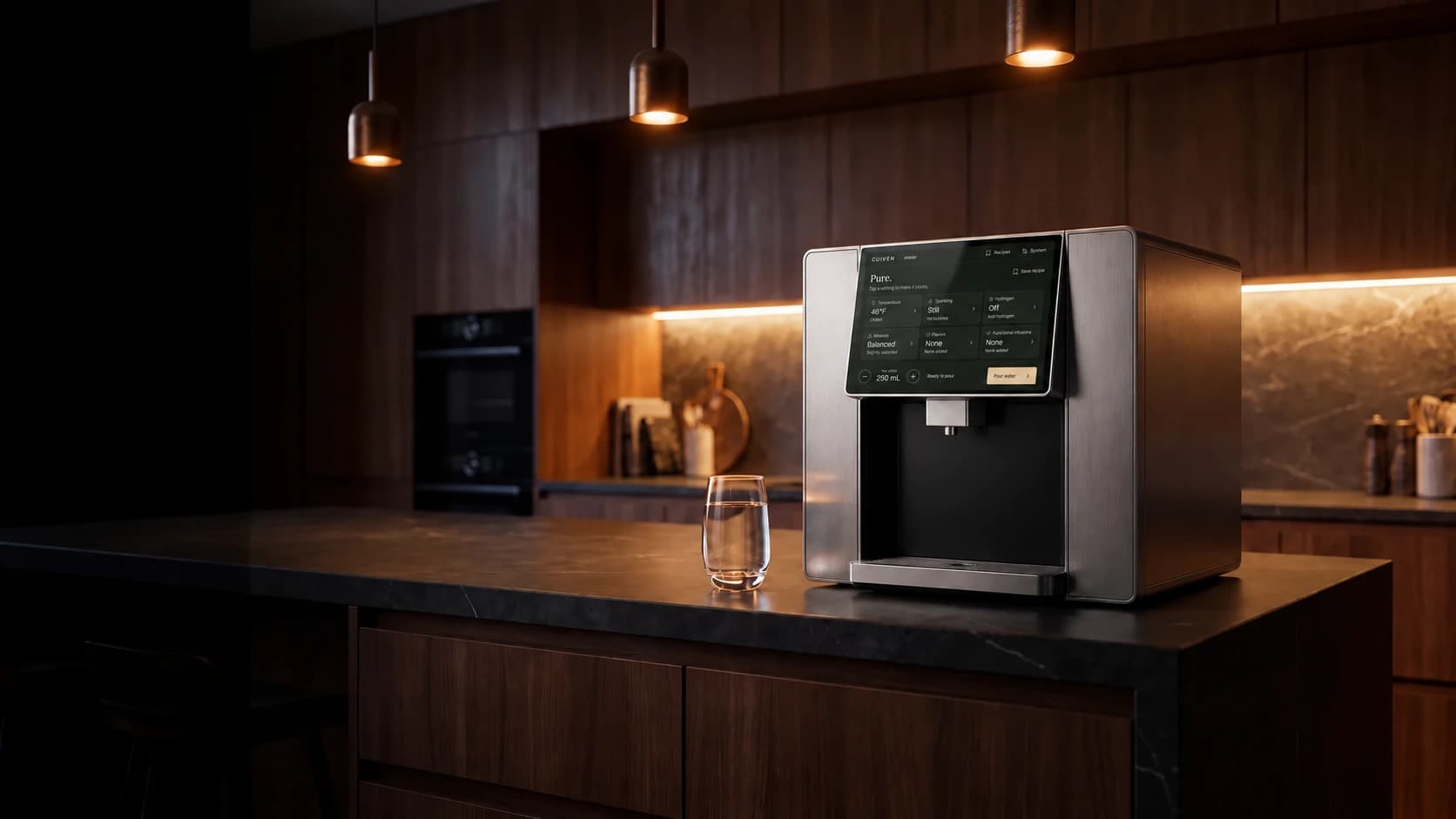
Atelier connects to a permanent supply, with equipment in a nearby service cabinet. The dispenser is where the selections come together, above the glass.
Incoming water
The installation connects the supply, shutoff and service equipment. The local water report helps identify the source conditions.
Filtration
Sediment, carbon and membrane treatment perform different jobs in preparing the water.
Drink preparation
Temperature, mineral targets, carbonation or hydrogen and selected infusions define the drink.
Serving and care
Set the volume at the dispenser. Keep the outlet and replaceable supplies on their specified care schedule.
What each filtration stage does.
A sediment filter captures particles. Activated carbon uses its surface to adsorb substances from water and is commonly used for taste and odor treatment. Reverse osmosis uses pressure and a membrane to separate water from many dissolved substances.
These are different mechanisms, which is why a multi-stage treatment path uses more than one type of filter. The membrane stage also has a concentrate stream that goes to the drain.

| Stage | Mechanism | Why it is distinct |
|---|---|---|
| Sediment filtration | Physical retention of particles. | Addresses suspended material before later treatment. |
| Activated carbon | Adsorption at the carbon surface. | Commonly used for taste and odor treatment. |
| Reverse osmosis | Pressure-driven separation through a membrane. | Addresses dissolved substances as well as particles too small for a coarse filter. |
| UV treatment | Ultraviolet light used for disinfection. | Acts on microorganisms; it is a different task from dissolved-mineral removal. |
Temperature and volume are separate choices.
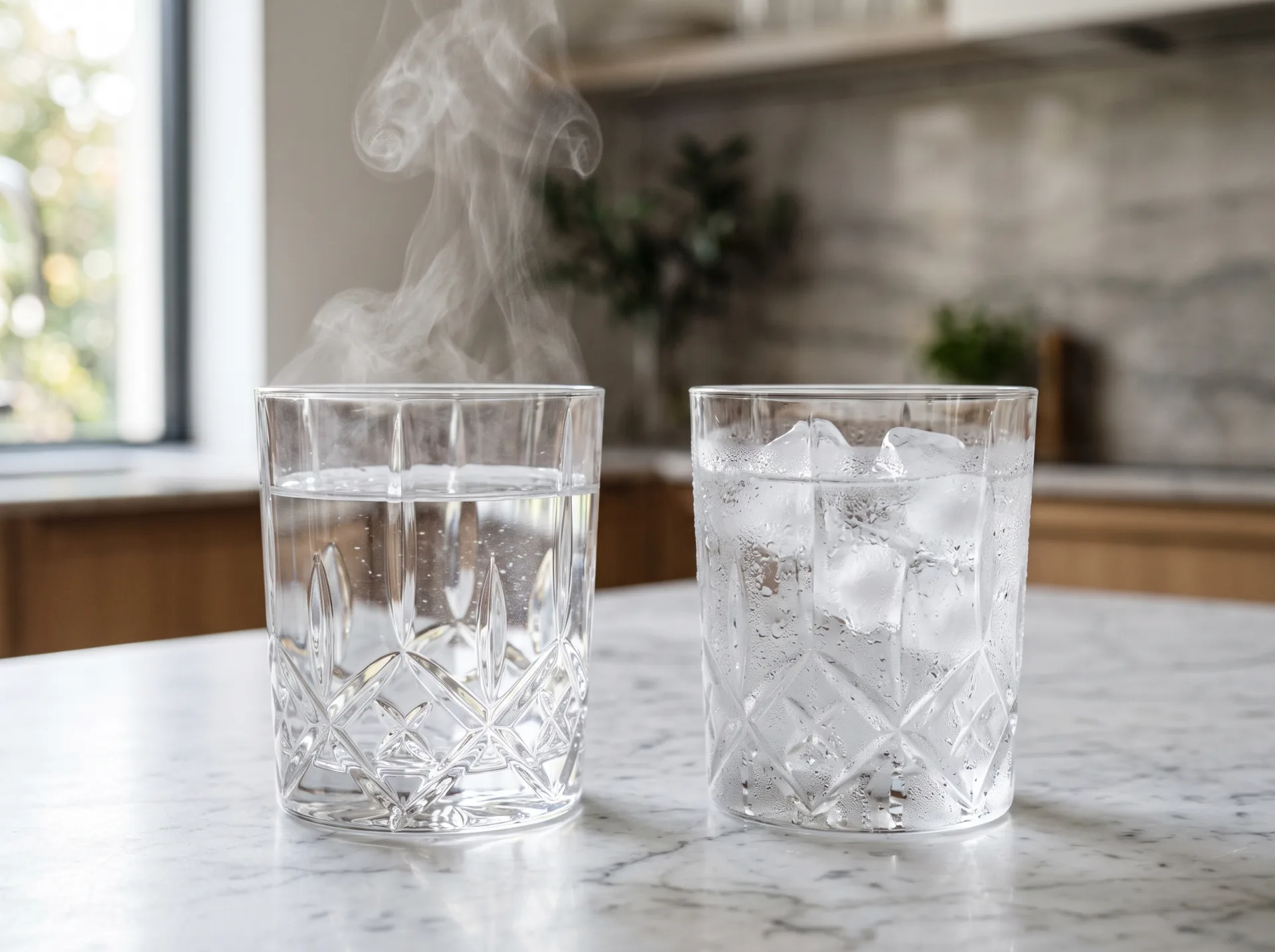
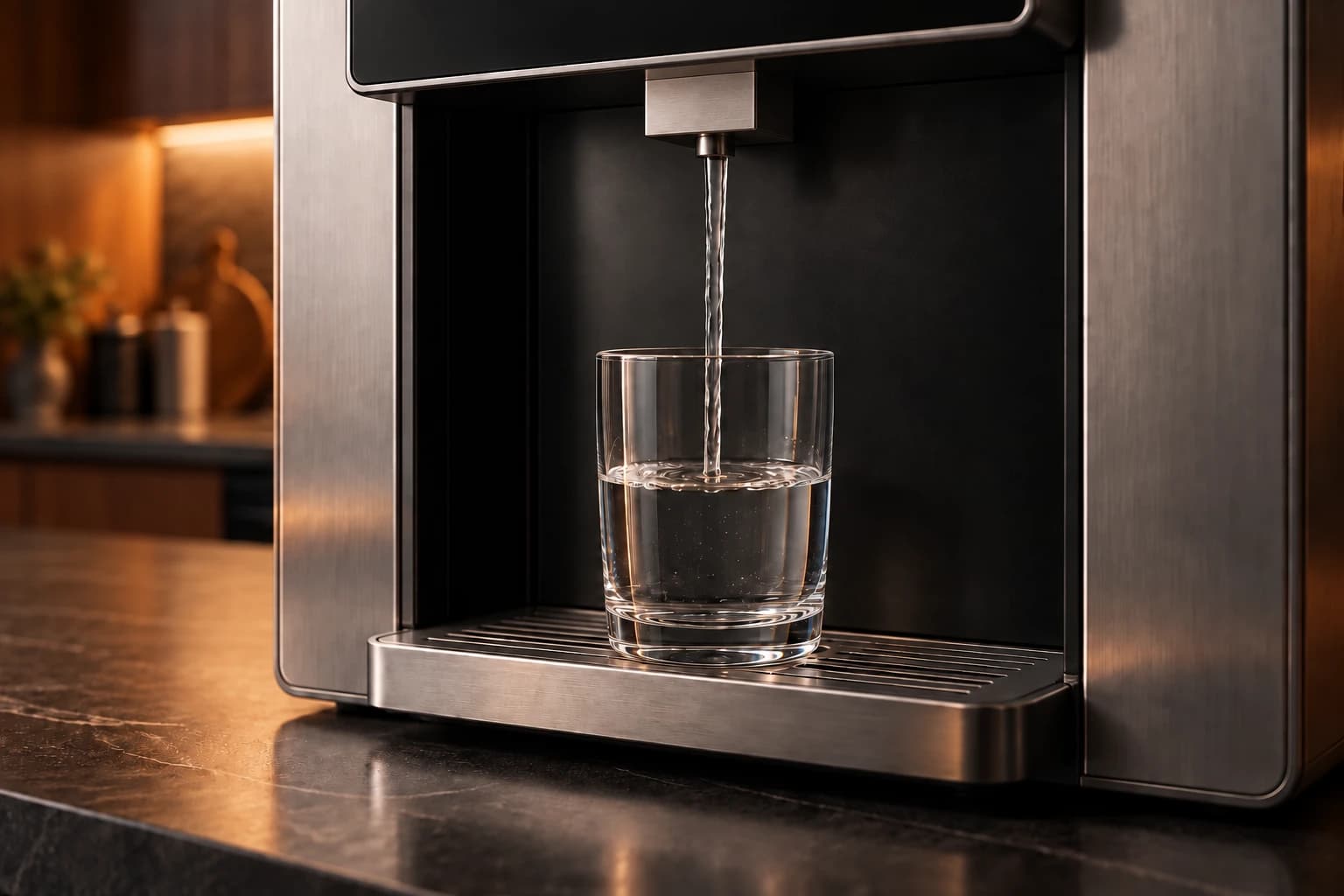
Choose room-temperature, chilled or hot water, then set the serving size. A short cup for tea and a carafe for the table can each retain their own settings.
Switch between Celsius and Fahrenheit, and between milliliters and US fluid ounces, from System. The unit display changes how the setting is shown; the selected quantity remains the same.
Hot water asks for confirmation before dispensing. Use a vessel suitable for the selected temperature, keep the outlet clear and use Stop whenever you need to interrupt the pour.
Set the amount of sparkle.
Sparkling water contains dissolved carbon dioxide. Atelier’s bubbles control lets you choose a CO₂ target in grams per liter, from still water to a more pronounced sparkle.
Carbonation is a setting you can save with temperature, volume and a mineral profile. It can also be part of a flavor recipe: for example, citrus with bubbles or a lighter mint combination.
When comparing settings, keep the serving temperature and glass the same. Change the carbonation first, then adjust another part of the recipe once you know which level you prefer.

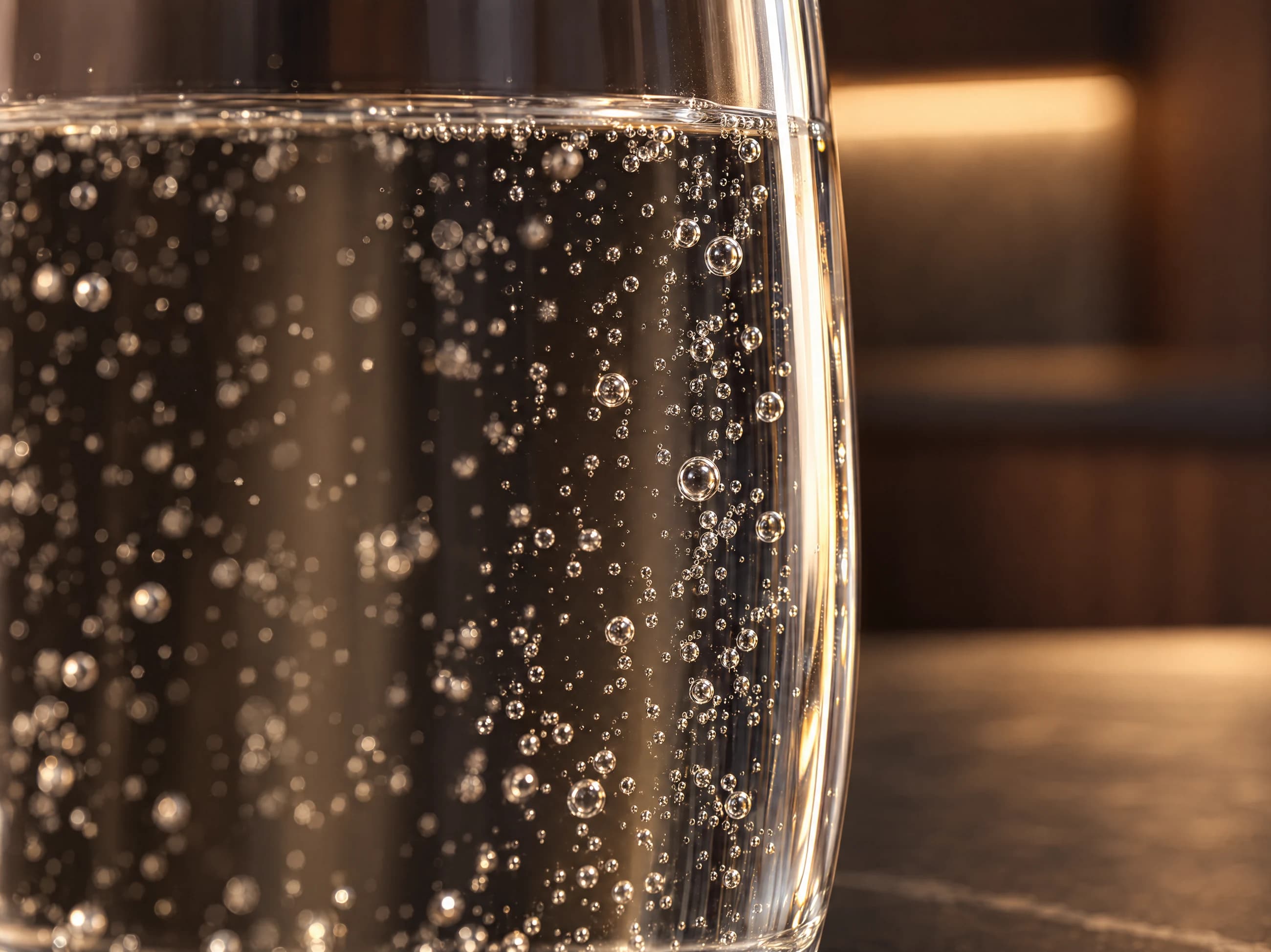
Hydrogen has its own control.
Hydrogen water contains dissolved molecular hydrogen, H₂. It is a different gas from the CO₂ used for sparkle. Its concentration is expressed in milligrams per liter.
Open Hydrogen to select a concentration target for chilled still water. The setting is independent of serving volume, so both are visible when you review the drink.
Save a hydrogen recipe with its water settings and mineral selections. Hydrogen and carbonation are separate choices in the controls; choose the one you want before pouring.
- H₂ / Hydrogen
- A dissolved-hydrogen selection, shown as a concentration target in mg/L.
- CO₂ / Carbonation
- The gas used for sparkling water, selected through the bubbles control in g/L.
Build the composition after treatment.
Terroir profiles and custom mineral targets let you choose the balance in the drink. Calcium, magnesium, potassium and sodium each have their own adjustment.
Flavors and functional infusions use separate ingredient controls. Set each one as a percentage of its cartridge recipe, then review the combination before pouring.
This separates the decisions that are often bundled together in a bottled drink: its water, mineral balance, temperature, carbonation and additional ingredients.
- Mineral profiles
- Start with Izumi, Jökla, Alpin or a light, balanced or fuller mineral profile, then adjust individual targets.
- Flavors
- Choose Lemon, Cucumber, Mint, Ginger, Berry or Citrus Blend, individually or in combination.
- Functional infusions
- Choose from ten named infusions, each with its own recipe-relative strength setting.
- Plain water
- Leave additions off and select the temperature and serving size you prefer.

Save the full recipe, not just its name.
A saved recipe keeps the serving size, temperature, carbonation or hydrogen target, mineral profile and every selected infusion strength together. Load it, review it and make an adjustment when your preference changes.
The home screen keeps six setting groups visible. Recipes and System remain secondary, so the main route stays short: choose a drink, check its settings and pour.
| Control | What it holds |
|---|---|
| Water settings | Temperature, volume and the chosen gas setting. |
| Minerals | Named profile and individual calcium, magnesium, potassium and sodium targets. |
| Infusions | Selected flavor and functional ingredients, with each strength. |
| Recipe library | Complete named combinations to load, edit or remove. |
| System | Units, child lock, care and source availability. |
Equipment you can reach.
The service cabinet needs water, drainage, power, ventilation and access for consumable changes. Include those requirements when deciding where the dispenser sits.
Filters, mineral supplies, infusion cartridges and gas supplies have different roles. Keep the correct replacement reference and care instructions with each one, and leave the service route unobstructed.
For the incoming water, start with the report from the utility serving your address. If you have a specific concern, use the appropriate tap-water test to add detail to the installation discussion.