Journal / Taste & minerals
How to taste water
Compare waters at the same temperature, then look at their mineral composition.
Composition affects taste.
Water carries dissolved substances, including minerals, which contribute to its taste.
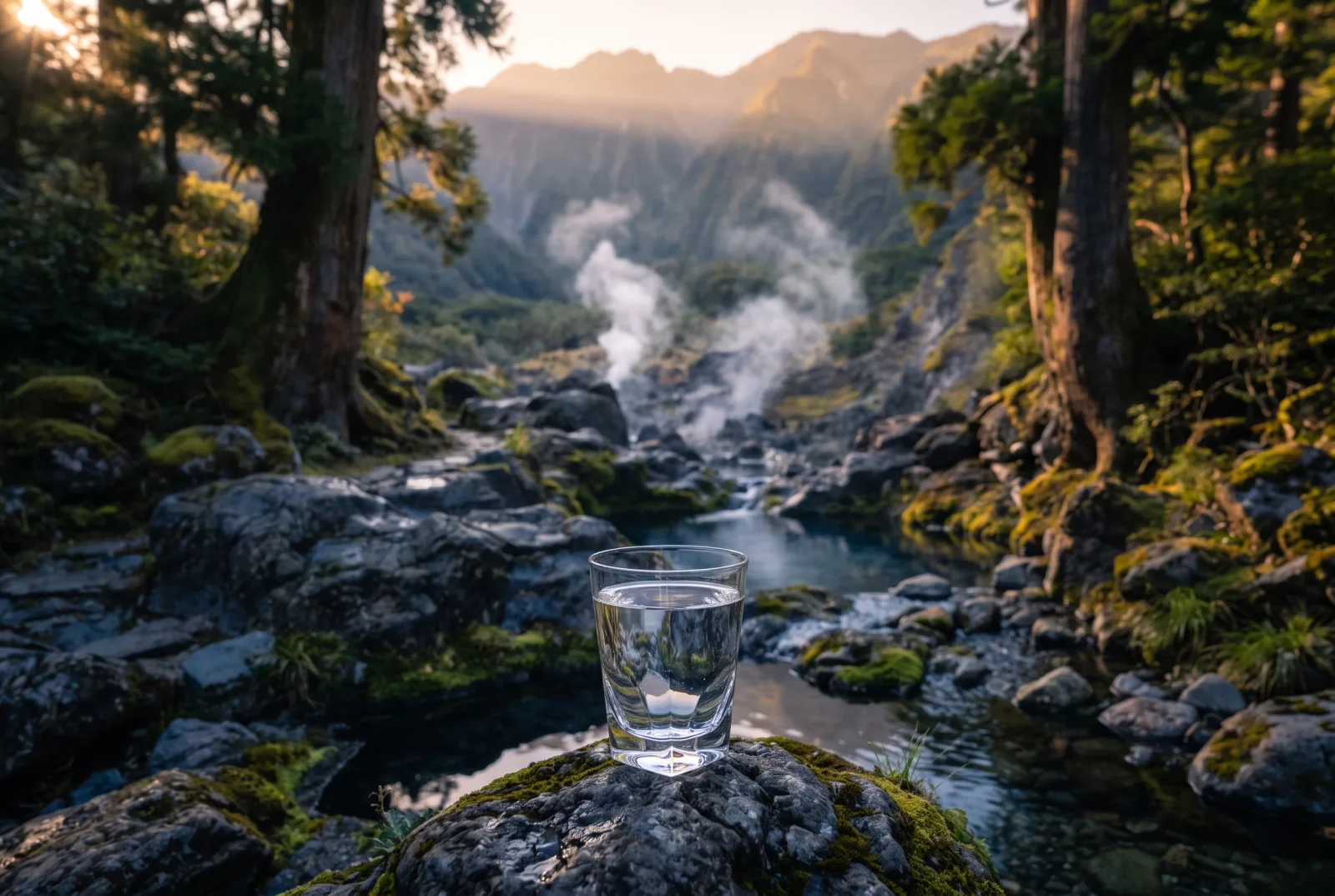
The landscape leaves a chemical signature.
As water moves through rock and soil, it dissolves substances along the way. Different mineral balances contribute to differences in taste and hardness. A water’s origin is a useful starting point for exploring its character.
Look beyond a single total-dissolved-solids figure. That total does not tell you which dissolved substances make it up. Compare the mineral breakdown and the tasting experience together.
Four measurements, four different questions.
| Measurement | What it describes |
|---|---|
| Mineral composition | The amounts of individual substances, such as calcium and magnesium. |
| Total dissolved solids | The combined amount of dissolved material measured or estimated by a specified method. |
| Hardness | A measure largely associated with calcium and magnesium, commonly expressed as CaCO₃. |
| Alkalinity | The water’s capacity to neutralize acid; it is different from pH. |
Make the tasting useful.
Write down three things for each glass: the first impression, the feel in the mouth and the finish after swallowing. Then try the same waters with food. A water you enjoy alone may play a different role beside a meal.
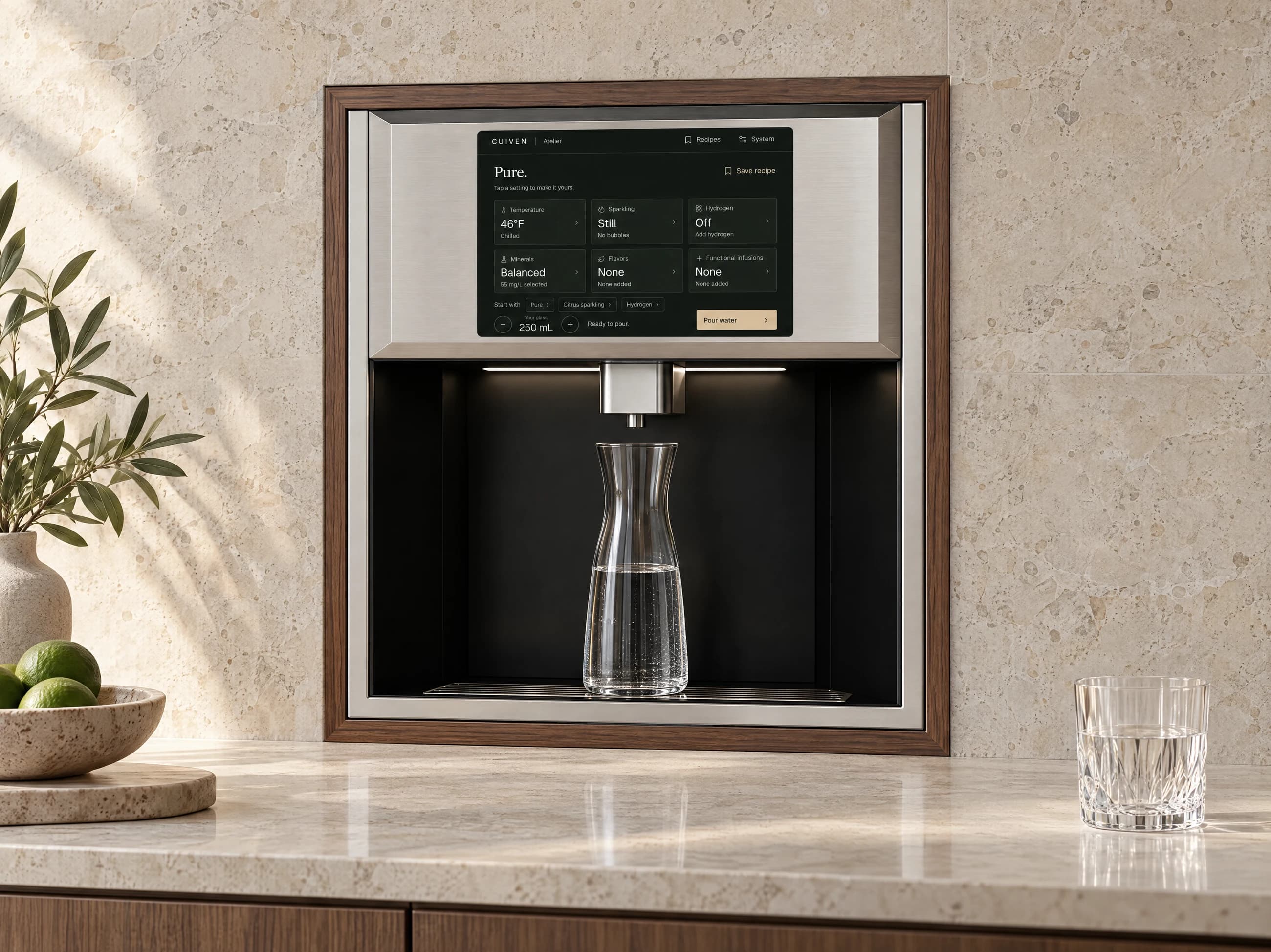
To explore a mineral setting in Atelier, keep temperature and carbonation the same while changing the mineral profile. Save the version you prefer, then try changing one other setting. This gives each comparison a clear purpose.
Compare two or three waters.
Serve them in identical clean glasses, at the same temperature. Start with still water, so bubbles do not dominate the comparison. Give each glass a letter and reveal the labels afterward.
Notice the first impression, the feel on the palate and the finish. Try each with a familiar food, and record which you prefer.
Read the mineral information.
After tasting, compare the available mineral information. A total-dissolved-solids number alone cannot describe the full composition or predict your preference.
Words such as light, rounded or mineral can be useful tasting notes.
Adjust minerals in Atelier.
Atelier’s mineral menu includes Izumi, Jökla and Alpin, alongside light, balanced and fuller mineral choices.
Open Custom to adjust the calcium, magnesium, potassium and sodium targets. Save the blend with your chosen temperature, carbonation and serving size.